Today at the European Parliament, EFFAT contributed to the debate on Decent Work for All: Advancing the Rights of Domestic Workers in the EU, ahead of the upcoming own-initiative report to be led by MEP Catarina Martins (The Left).
Domestic work is a cornerstone of Europe’s care economy. As the EU faces demographic ageing, rising care needs, persistent gender inequalities, and increasing reliance on migrant labour, domestic workers are essential to supporting households and enabling the wider labour market to function.
Yet many domestic workers, particularly migrant women, including those with undocumented status who may fear retaliation or deportation, continue to face low wages, excessive working hours, undeclared work, exclusion from social protection, discrimination, and violence and harassment.
Despite International Labour Organization Convention C189, too many governments have failed to act, leaving domestic workers outside the protection of labour law, social security systems, and collective bargaining.
Enrico Somaglia, EFFAT General Secretary and Grace Papa, IDWF Regional Coordinator and EFFAT policy Officer for Domestic Work, were clear about the path forward:
- Recognition: Domestic work must be fully recognized as both real work and essential work that is fundamental to families and our economy.
- Public Investment: Governments must invest in personal and household services to make domestic work accessible and affordable for families, while ensuring the sector is properly regulated and sustainable.
- Decent Work through Social Dialogue: Domestic workers must be guaranteed decent wages and working conditions through social dialogue and collective bargaining, with particular attention to the most precarious and vulnerable workers, especially migrant women.
For reference:
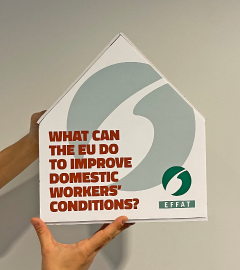
- EFFAT’s House of Dignity campaign sets out concrete actions the EU can take to improve the working and living conditions of domestic workers.
- EFFAT’s Guiding Framework for the Recognition and Regulation of Domestic Work provides a practical roadmap for implementing ILO Convention C189 at national level, drawing on best practices and successful policy examples from across the EU.